What If Staying Close Didn’t Feel Like Effort?
WithLove: For when a text isn’t enough. A design exploration of how we express care, intention, and emotion in a fast, low-attention world.
Product Design
User Behavior
Emotional Design
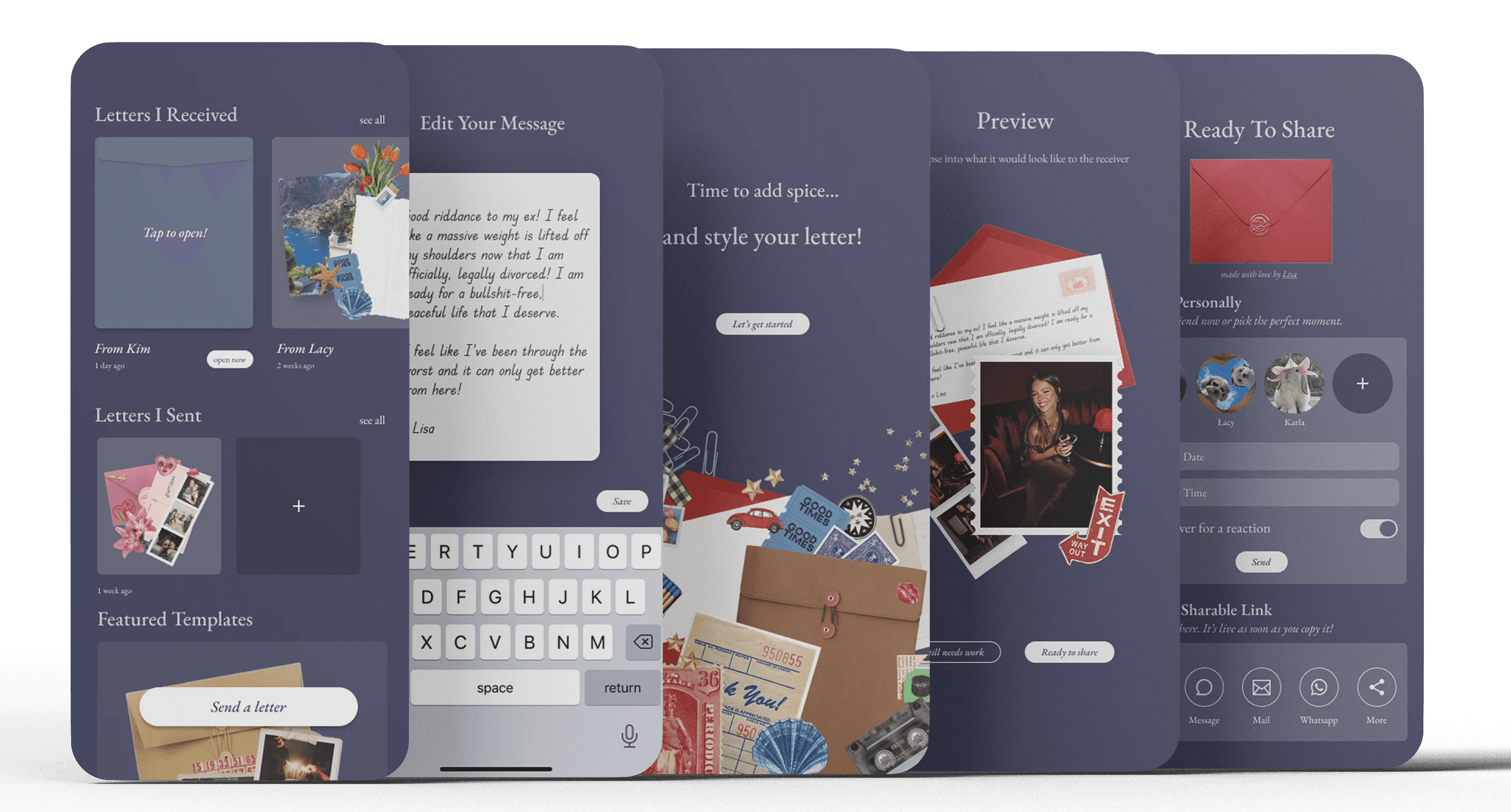
a quick rundown
What was the problem?
People want to express care and thoughtfulness, but digital communication prioritizes speed over meaning, making emotional expression feel effortful or overwhelming.
What was the goal?
To explore how design can reduce the friction between feeling something and expressing it, creating space for intention, reflection, and emotional timing.
What did we do?
Designed With Love, a concept app that uses digital letters, guided templates, and intentional pacing to transform messages into meaningful moments.
Timeline
1 Month
Role
Designer, Research (team of 3)
Tools
Figma, Photoshop
The Brief
Staying connected has never been easier but staying intentional with how we connect is another story.
Big and small moments, like celebrations, endings, milestones, are often shared through the same tools we use for logistics and casual updates. While quick messages work well most of the time, they often fall short when something deserves more care.
The result isn’t a lack of feeling, but a mismatch between the moment and the medium.
User Research
What Do People Have To Say?
We began with a simple curiosity:
Why does expressing care often feel harder than feeling it?
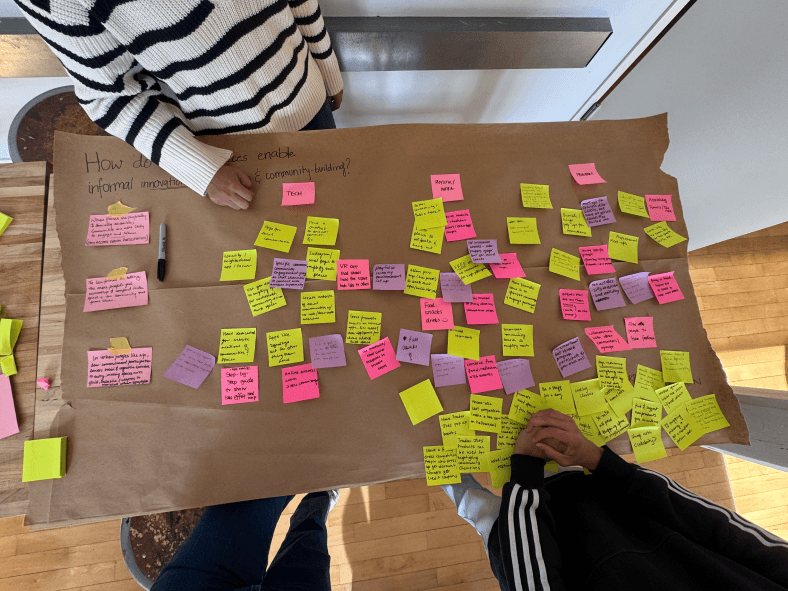
To ground the project, we spoke with people about how they stay connected with friends and loved ones, what makes those relationships feel fulfilling, and how they communicate during emotionally significant moments.
We also asked about slower forms of communication—writing letters, giving cards, sending gifts—and how those experiences compared to sending a text.
A few patterns surfaced quickly:
People didn’t struggle to care.
They struggled to start.
What if communication slowed down on purpose?
And what if we could reframe the experience around:
Reflection instead of reaction
Intention instead of immediacy
Emotional pacing instead of instant replies
our priorities
Three emotional moments we designed for

Excitement
That little rush you get the moment you start writing something meaningful.

Satisfaction
Seeing your message come together in a way that feels just right, "yep, that's so me."

Anticipation
That sweet tension while you wait to see how your friend will react when the get it.
Exploration
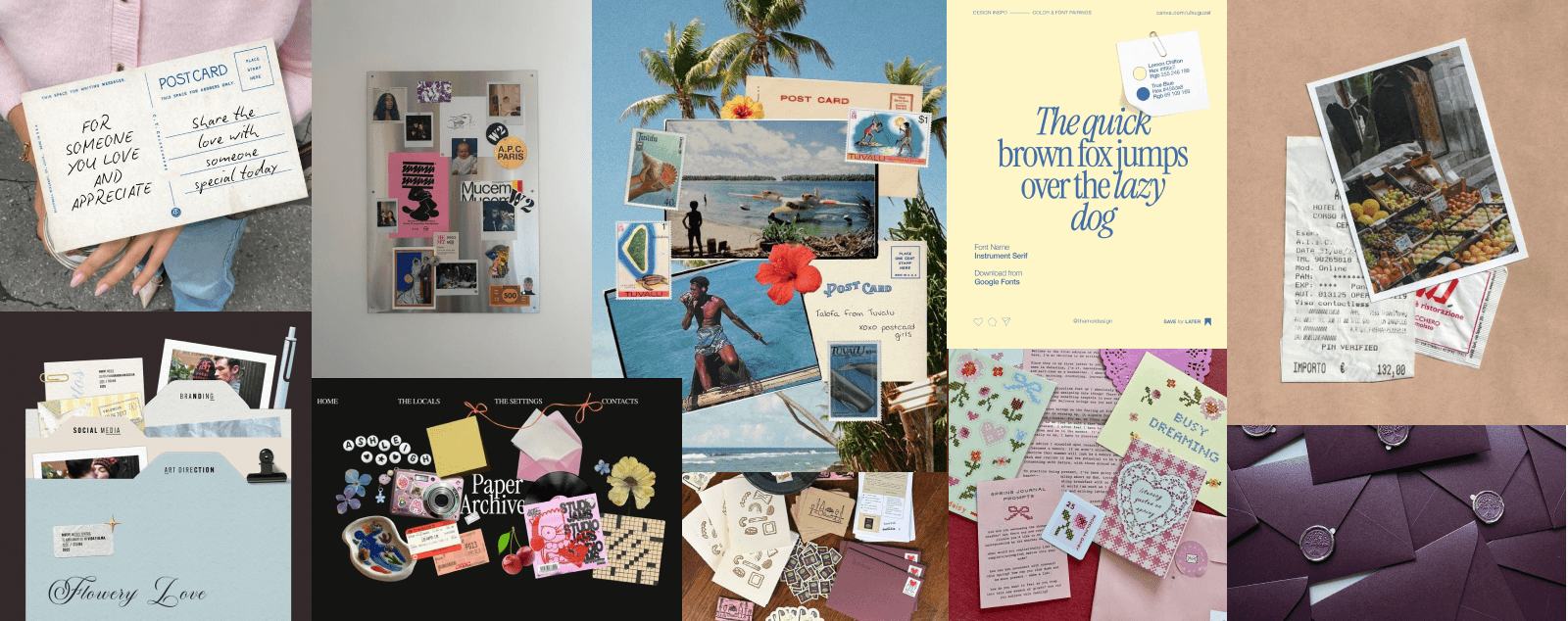
Design direction
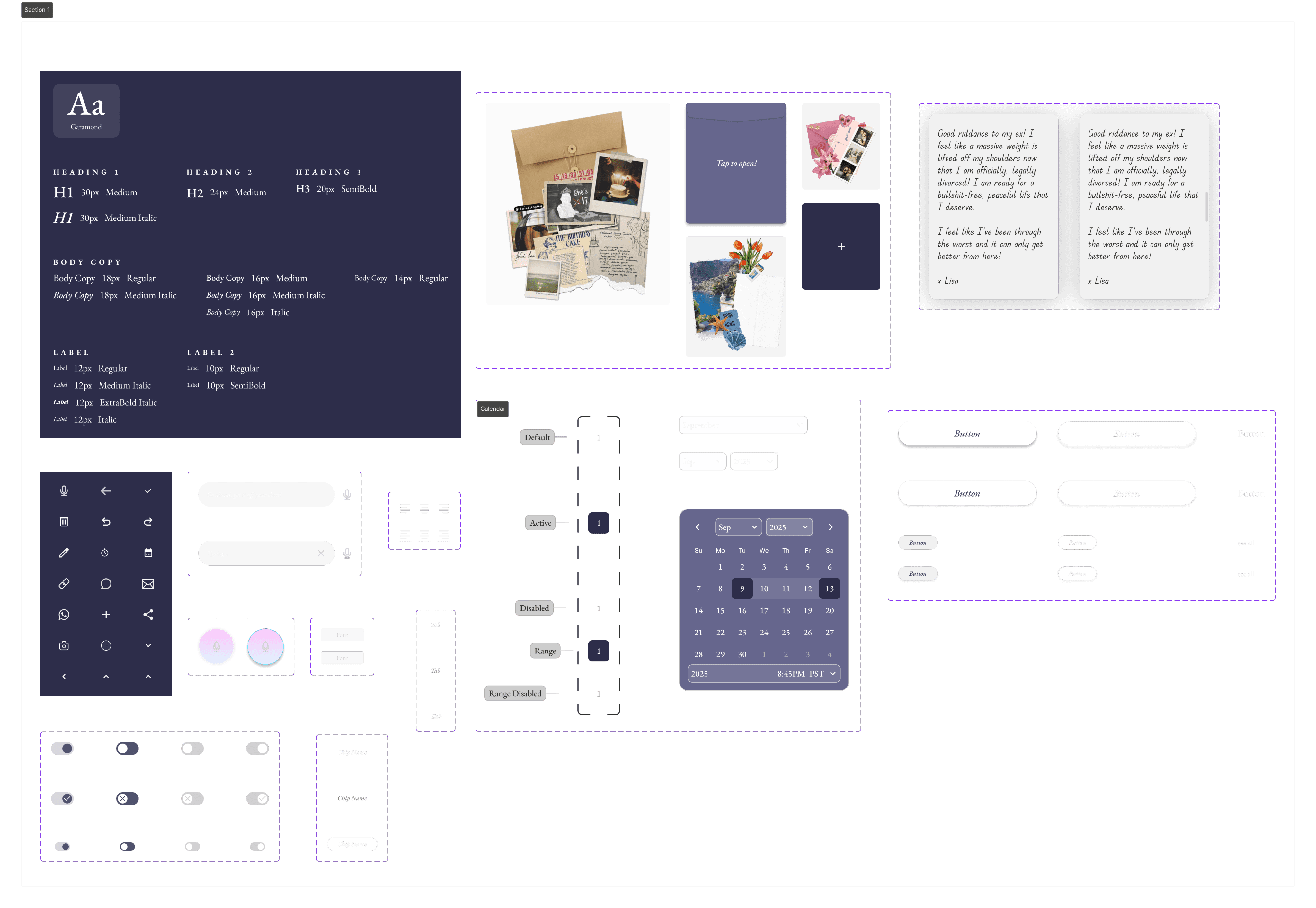
The visual language was designed to feel expressive, warm, and emotionally flexible — supporting multiple tones so the interface adapts to the moment being expressed.
Final Design
Introducing, With Love
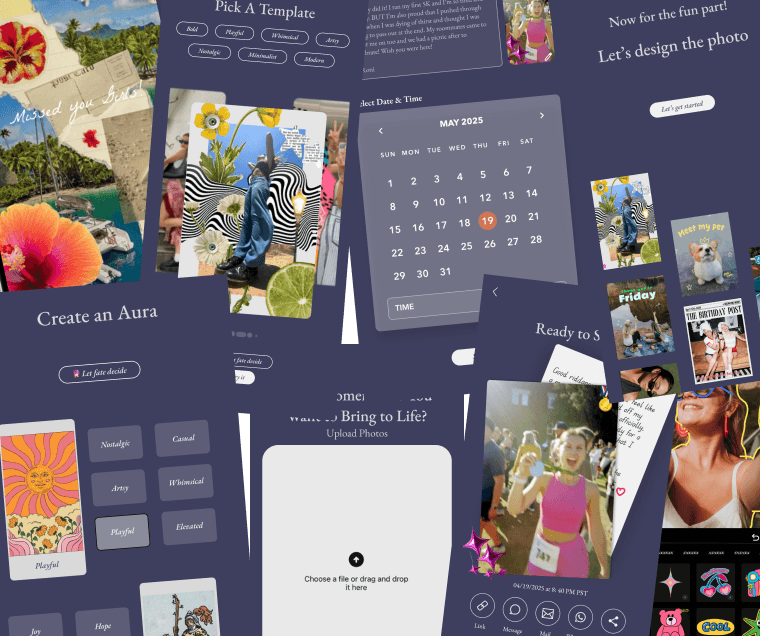
From template to personal letter to scheduled send, emotional expression as a ritual.
Emotional Principles
The Thought Behind The design


01 – Excitement
A Moment To Process
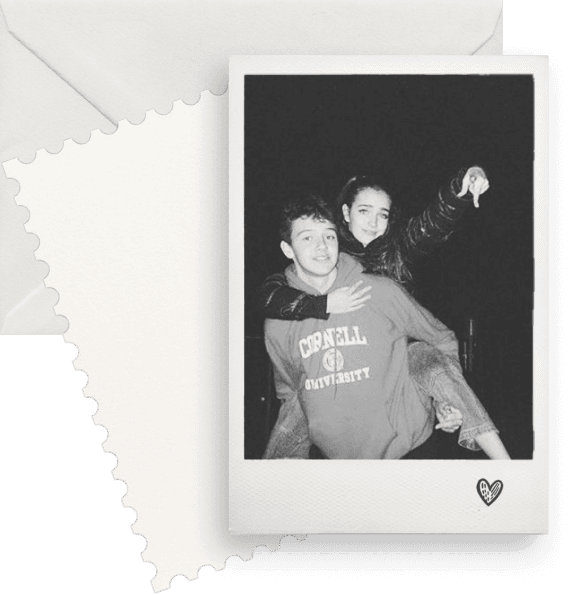
Writing the content of the letter helps users reflect and express their emotions — through speaking or writing — to make sense of what they feel.
Reflect
02 – Excitement
Reduce choice fatigue
Templates that match the vibe of your message so it feels instantly expressive. AI suggests a direction, you personalize from there.
Personalization
Templates


03 — Satisfaction
Express Yourself
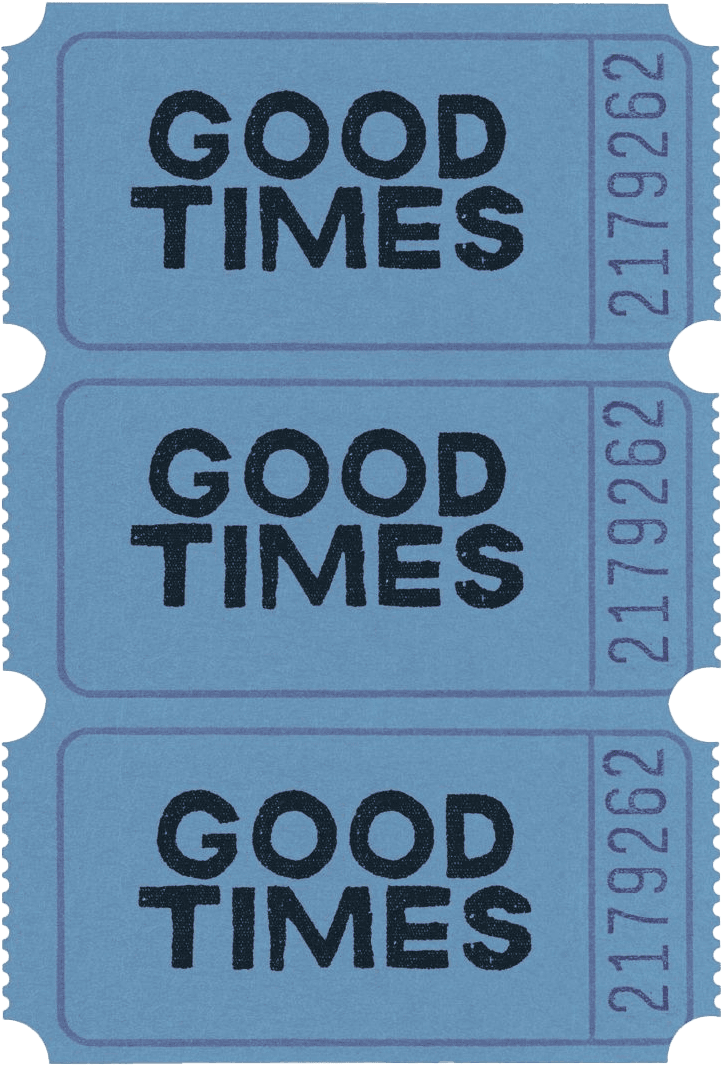
Photos and stickers let users represent their experiences tangibly. Turning what used to feel like a chore into something genuinely satisfying.
Stickers


04 — Satisfaction
A moment before sending
Seeing the final version gives control, go back and tweak, or feel confident and share. Reduces anxiety and gives emotional closure before it goes out.
Preview reduces anxiety
Choice gives control
Emotional closure
05 — Anticipation
Ready to share
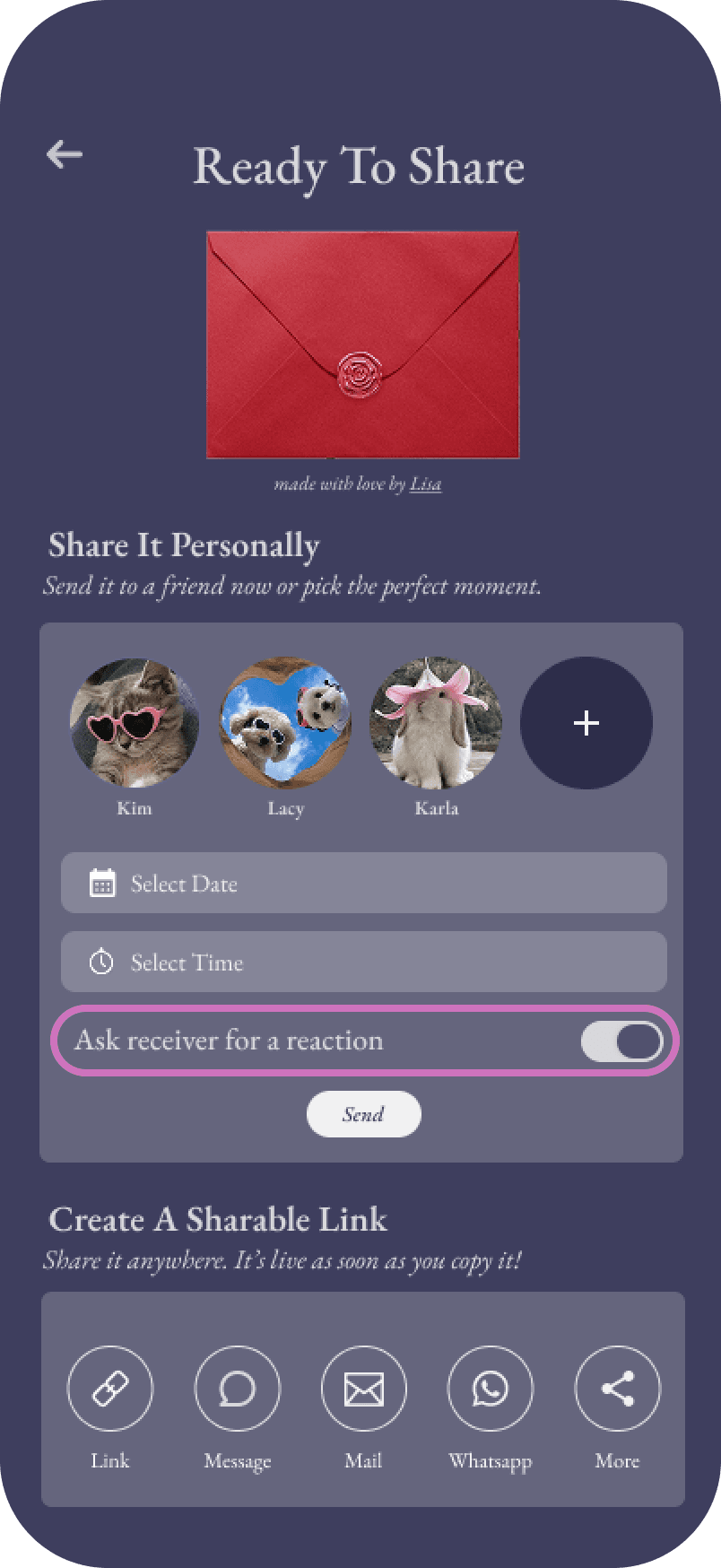
Schedule for a birthday or a late-night surprise. Ask for a reaction. That quiet excitement, the message is out there, and now you wait, imagine, and feel all the possibilities.
Preview reduces anxiety
Choice gives control
Emotional closure
Closing Thoughts
What did i learn?
This project reinforced that thoughtfulness is rarely a motivation problem — it's often a design problem. People don't struggle to care; they struggle with starting, choosing, and feeling confident enough to express themselves.
With Love taught me that slowing an interaction down can increase its perceived value — and that constraints, when designed thoughtfully, can create freedom rather than limit it