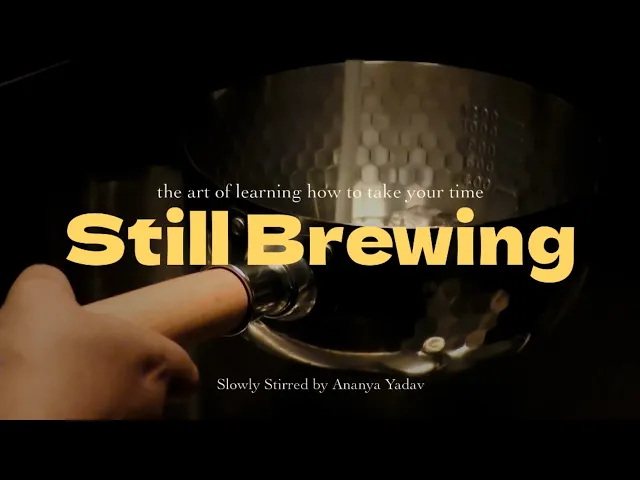
Is Growing Up Just Learning How To Let Yourself Simmer?
A short film about learning how to exist without rushing to figure everything out.
Overview
Lately, I’ve been paying attention to how growing older actually feels. Not the milestone version, but the small, in-between moments where you notice you’ve changed without meaning to. Making chai has become a way for me to understand that. There’s a point where everything is calm, then everything turns chaotic, and eventually it settles into something familiar. It feels a lot like learning how to be a person.
This film is my attempt to make that feeling tangible. It’s about learning through existing, through repetition, and through everyday rituals that slowly begin to carry meaning. It’s about allowing time to do its work, and understanding that becoming isn’t loud. It’s subtle. The sections below outline the process behind making the film and how I arrived at the final piece.
Timeline
5 weeks
Role
Solo project
Tools
Premiere Pro, Procreate, Audacity
So, how did I get here?
The Initial Itch
When I got assigned this project, I didn’t know what I wanted from it. I knew I wanted to speak about the thoughts that surface in conversations with friends, and the low-grade anxiety that comes with growing older and feeling like time is moving faster than clarity.
A few directions surfaced early on. I considered talking about the pressure of being in your twenties, the fear of being seen or judged, and the quiet obsession with timelines, comparison, and whether you’re doing life correctly.
At its core, the impulse wasn’t to answer these questions. It was to acknowledge them. I wanted to process frustration without turning it into a rant, and to find a form that could hold uncertainty without needing to resolve it.
The ‘Aha’ Moment (if you can even call it that)
I’m skeptical of “aha” moments. Mine wasn’t dramatic. It was more of a slow realization.
I knew I wanted to make a video, but I didn’t yet know what I needed to say. And if I was going to say something, it had to matter.
On a day where everything felt slightly off, I procrastinated productively. Somewhere between scrolling past motivational content and feeling increasingly behind, it became clear that the problem wasn’t a lack of effort. It was the pressure to rush.
I wrote everything down. Not to solve it, just to get it out. What emerged wasn’t an answer, but a permission.
While revisiting old food videos I’d made before, it struck me that cooking had already been a way to think out loud. Speaking while making something familiar felt natural.
Chai made sense. It was slow, personal, and already happening.
That was enough to begin.
Actually having to write it out (the horror)
At some point in my early teens, I was told I wasn’t a good writer. I internalized that and avoided writing for years, defaulting instead to more visual forms of expression.
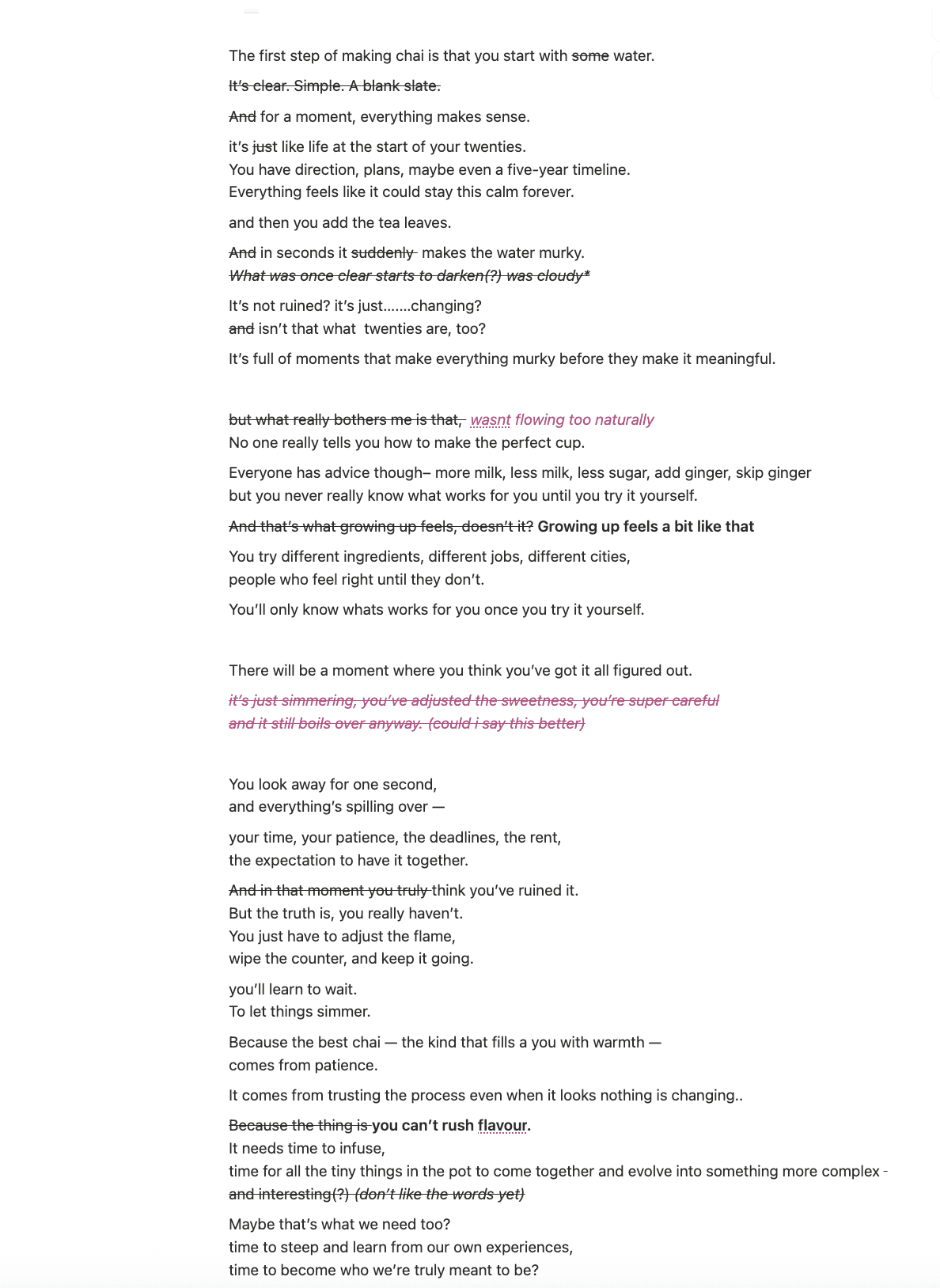
This project forced me to revisit that assumption and use writing as a way to think, rather than as a finished artifact. This time, the words came more naturally.
The script went through multiple iterations. I read it aloud to nearly twenty people, noting where it felt unclear, overly dense, or ineffective as a voiceover. Those revisions clarified not just the language, but the structure of the piece itself. It became clearer where to push and what wasn’t doing much work.
This process made it possible to translate the writing into a visual plan.
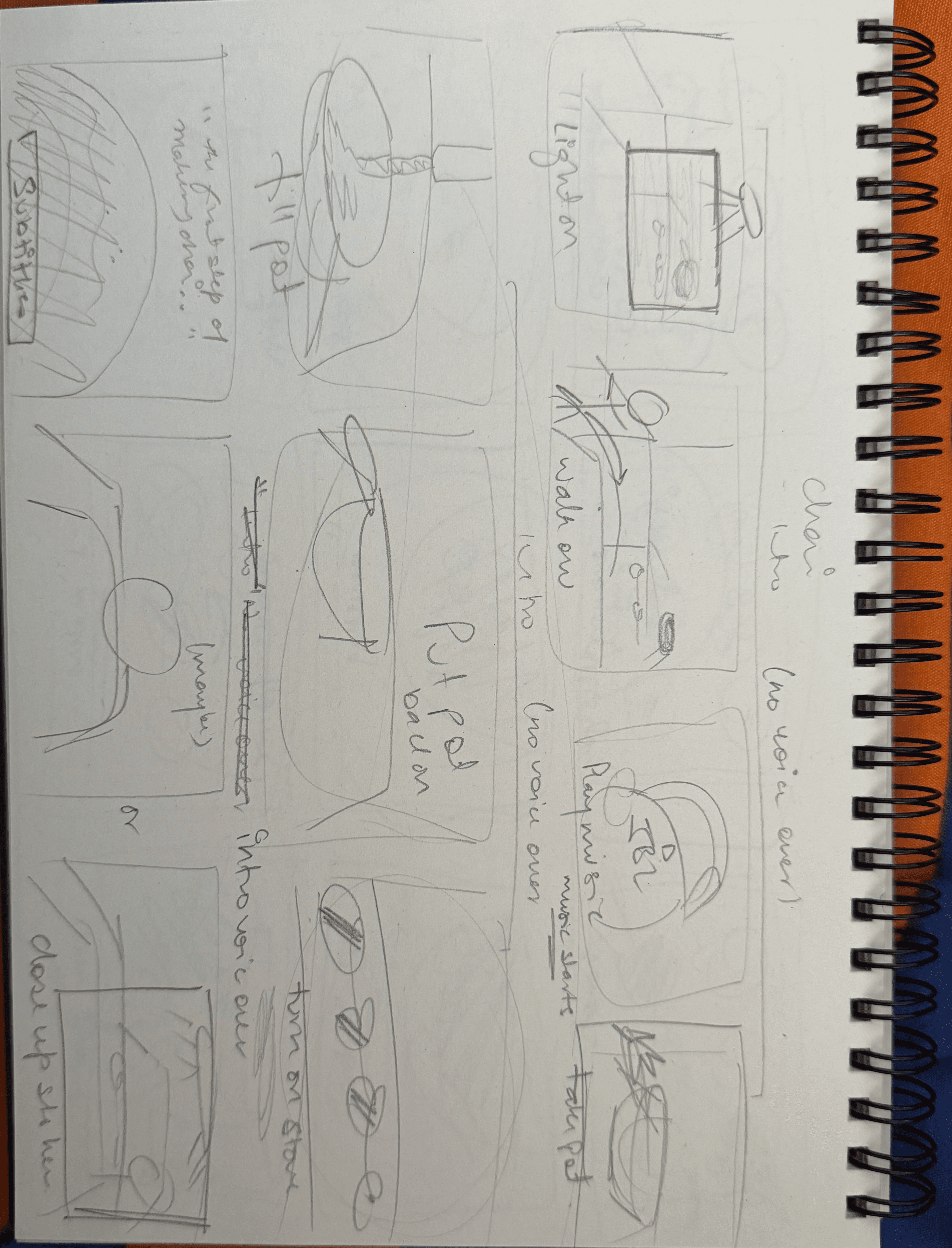
But, What Do I Even Need To Shoot?
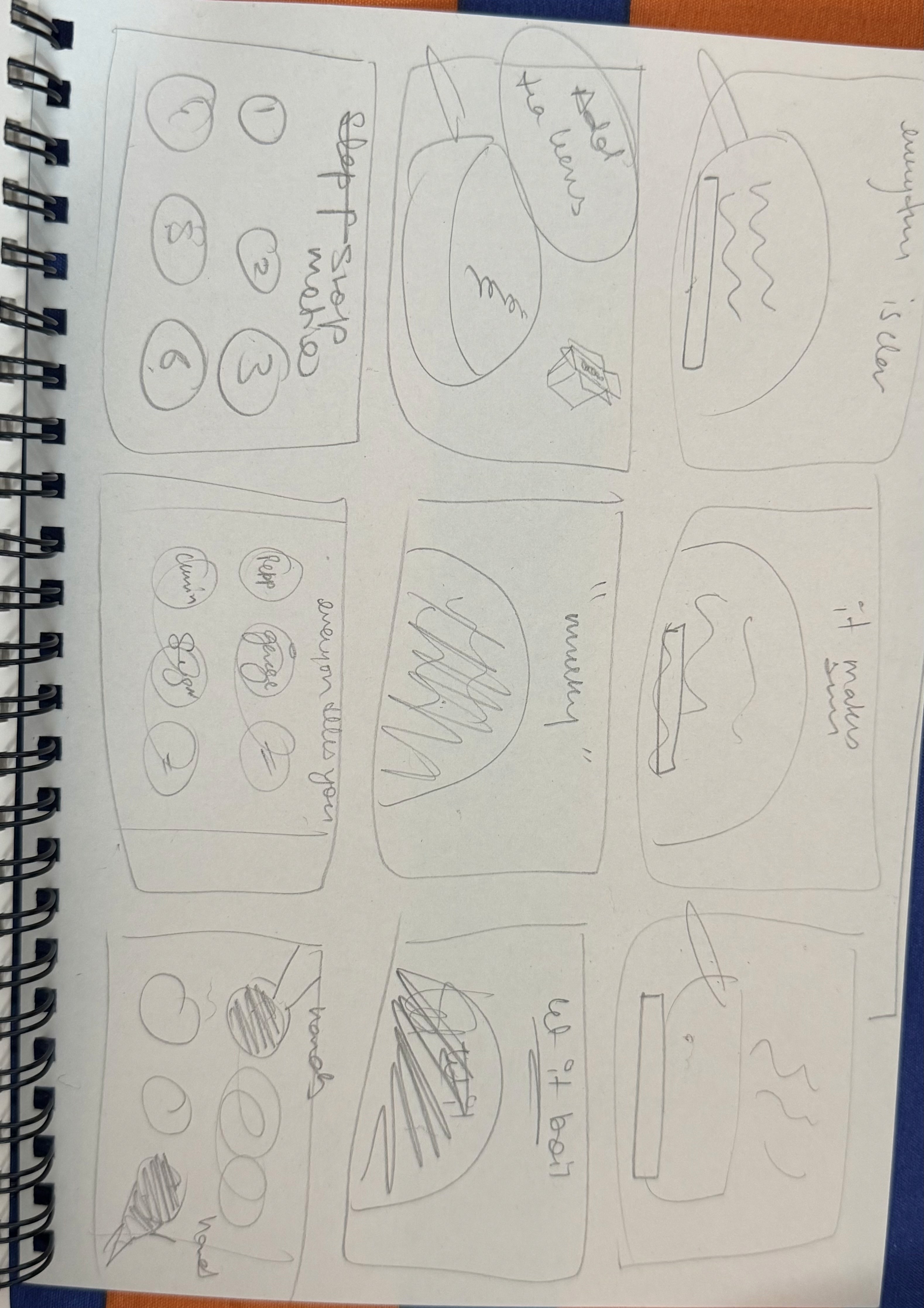
Before filming, I mapped out the sequence visually. The storyboard wasn’t about locking in shots, but about understanding pacing, repetition, and restraint.
From Plan to Practice
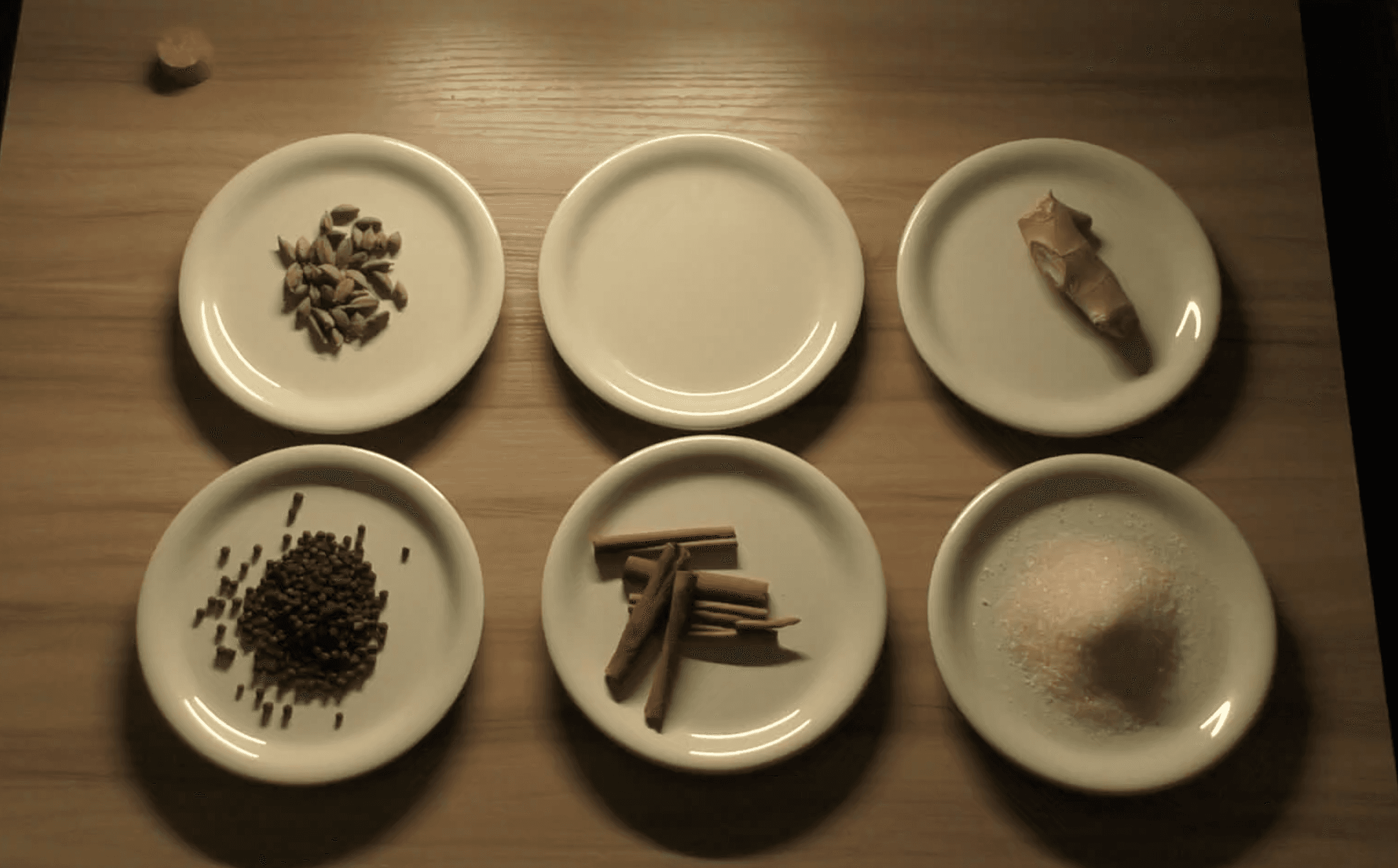
Before filming, I mapped out the sequence visually. The storyboard wasn’t about locking in shots, but about understanding pacing, repetition, and restraint.With the storyboard in place, the project moved from abstraction into execution. Decisions had to be made around how the video would be filmed, what would be shown, and how present I needed to be on screen. These choices were less about aesthetics and more about restraint. The goal was to support the voiceover without distracting from it.
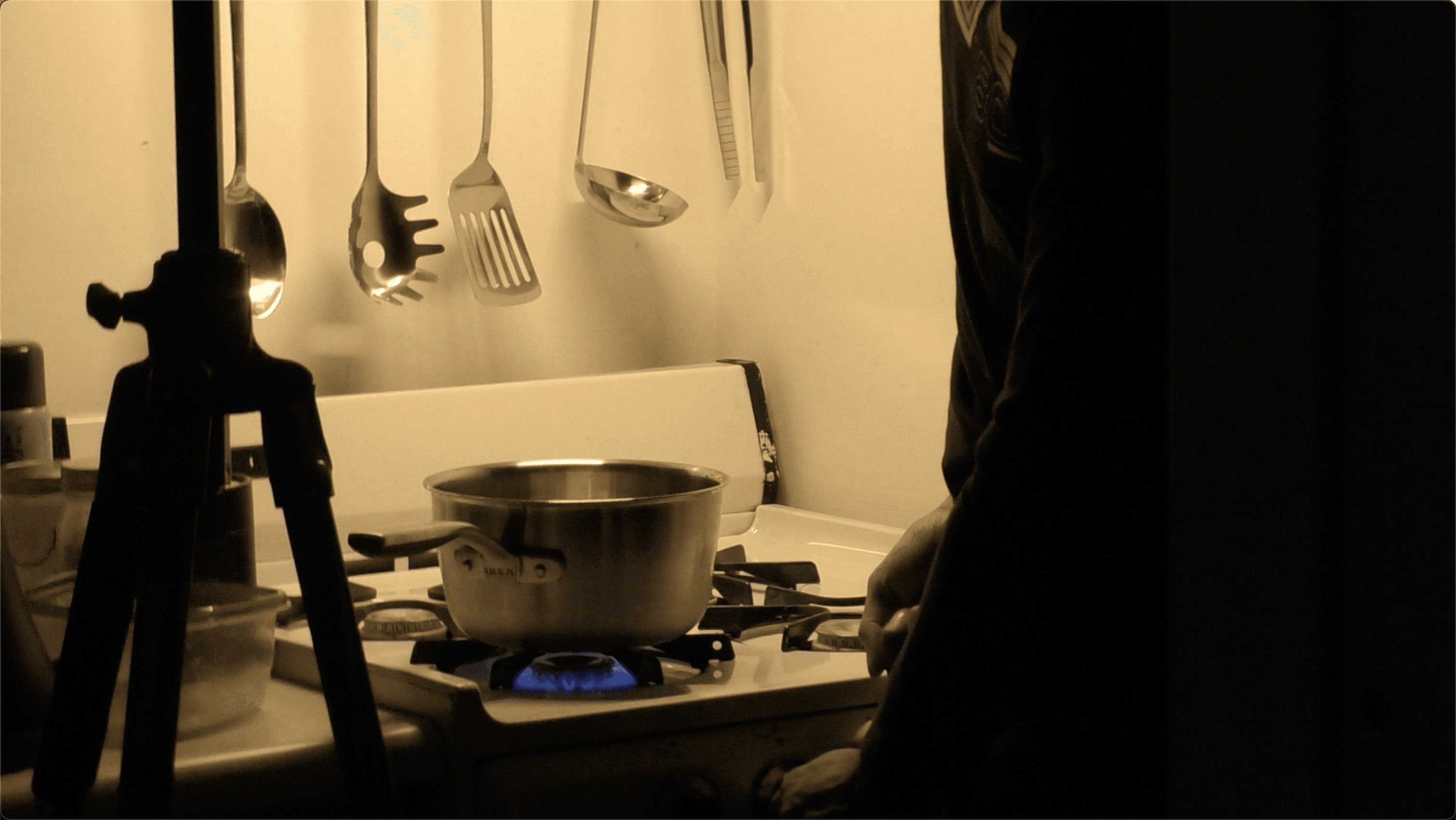
Practical considerations shaped the setup. What I had access to, what I could realistically film alone, and what could be repeated or adjusted all informed how the shoot was planned. The process became about simplifying the idea enough that it could be carried through without losing its intent.
This was initially envisioned as a stop-motion piece with a carefully planned, top-down layout and dynamic movement, but it never fully came together.
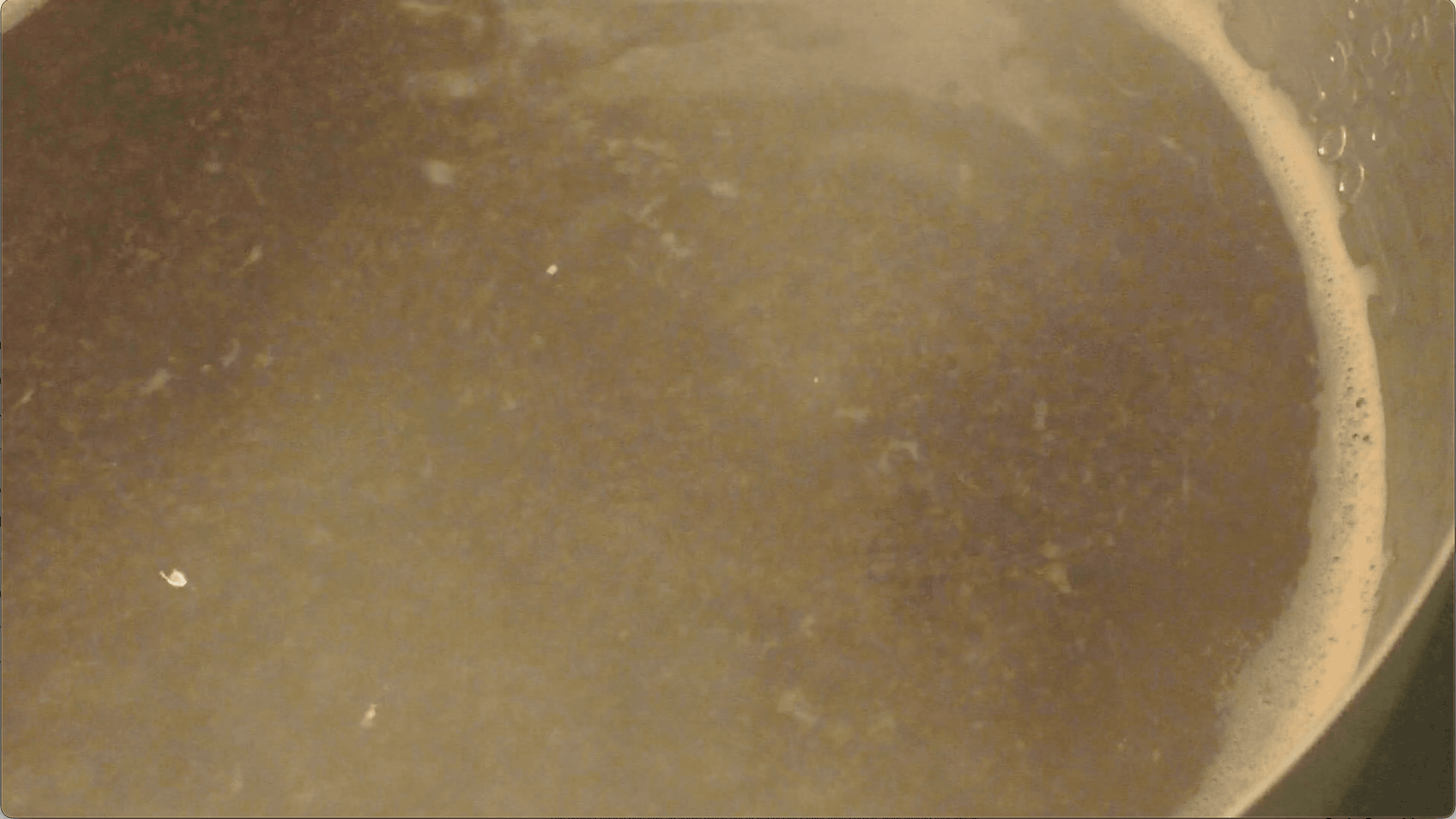
The cold room temperature caused constant steam from the pot, making close-up shots impossible despite having planned for them
.
The Execution
Where the “Plan” Fell Apart
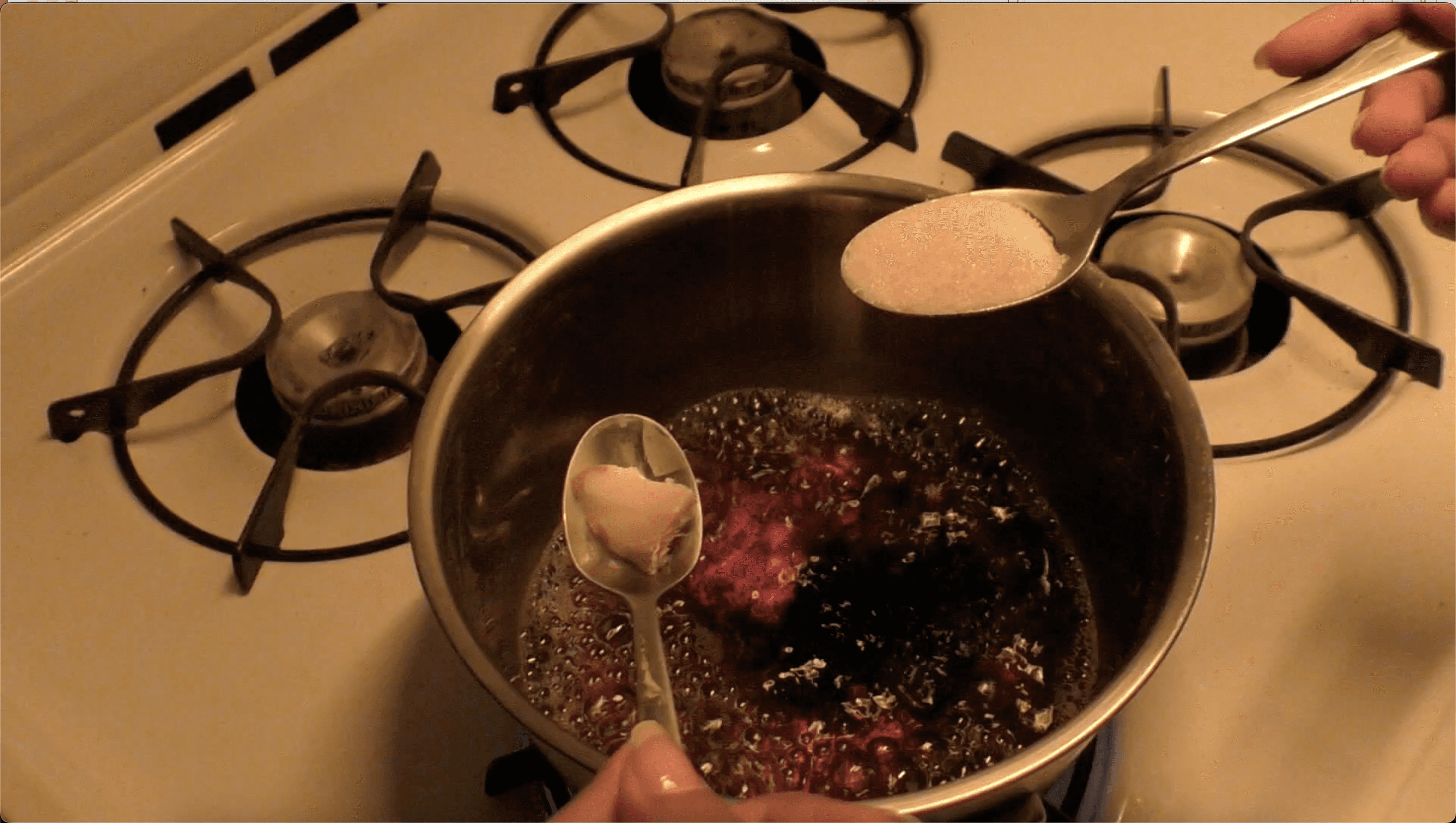
On one of the shoot days, nothing worked. The camera had three minutes of battery left and wouldn’t charge. The lighting was inconsistent. The chai wasn’t visually working. At one point, the milk split entirely.
There was no time to reset. There was also a deadline.
The project nearly became an audio piece out of necessity rather than choice. With limited footage and failing equipment, the focus shifted to what still held: the voiceover, the pacing, and the idea itself.
What I initially thought of as scraps became the structure. Instead of forcing the original vision, I adjusted to what was possible and finished the piece without losing its intent.
Behind The Scenes
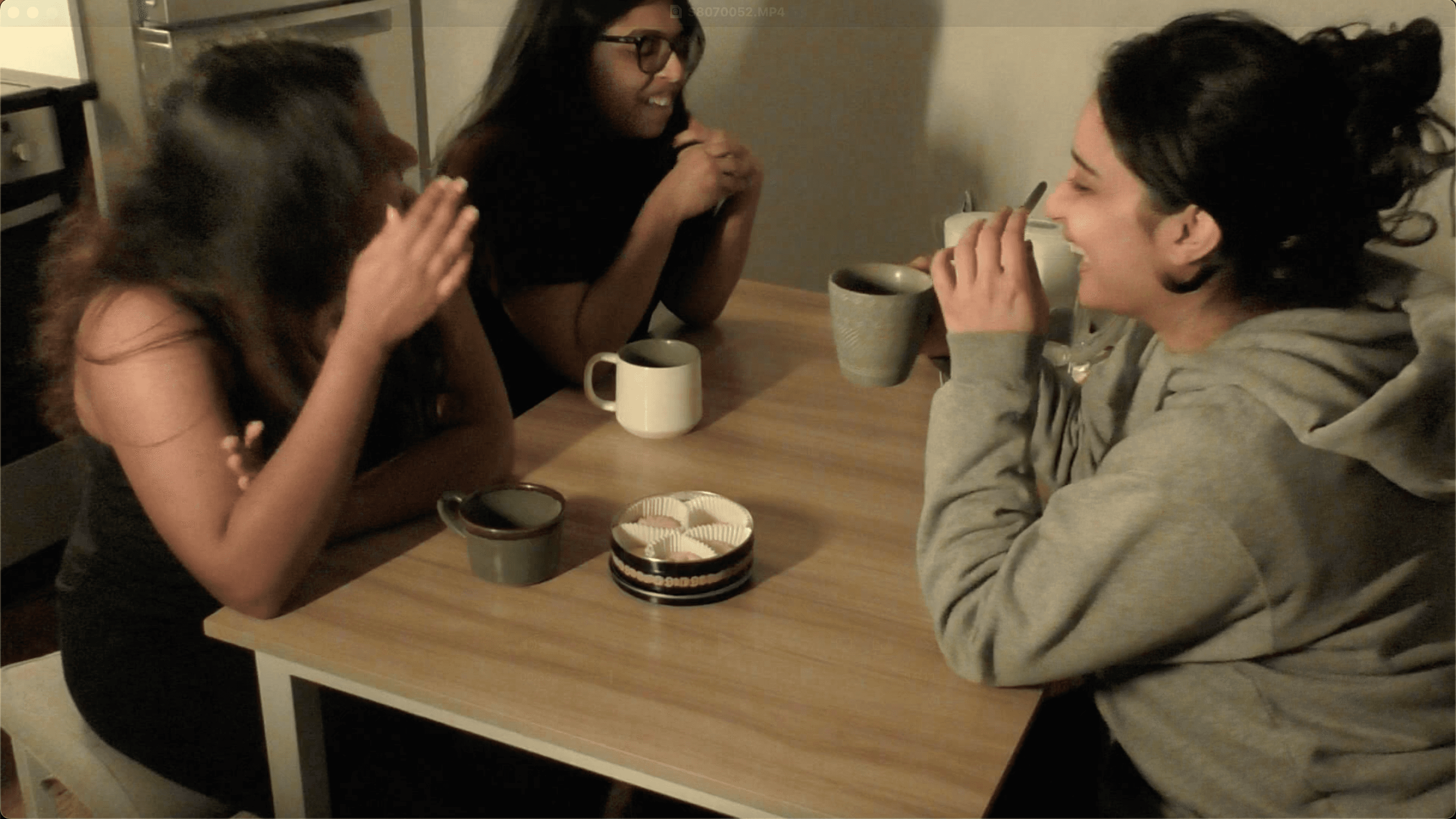
The Final Video
Closing Thoughts
Making this film reminded me that not everything needs to be answered to be meaningful. Some things need to be sat with, repeated, and allowed to unfold at their own pace. The process mirrored the feeling that first prompted the project: learning to exist in the in-between without rushing to label it as failure or success.
In the end, the piece became less about chai, or even the video itself, and more about giving uncertainty the time and space it usually isn’t afforded.
Note To Self
Take your time. Take up space. You deserve it.
Credits & Love
To my friends, for letting me think out loud and encouraging me to run with half-formed ideas.
To Nancy, for the support and encouragement. I haven’t felt supported like this by a professor in years. Thank you for making writing feel enjoyable again. I didn’t think I’d ever come back to it.
Fin.